Mykines - hike the puffin trail
July 31, 2018 15 min read
January 2026 update: Since my last visit to Mykines in 2019, a few things have changed. Much of the original information is still relevant, but some parts of this post are now outdated. As of early 2026, the path to the lighthouse is closed during the summer, so the full hike is no longer possible. Mykineshólmur, the islet where the lighthouse stands, is closed to the public.
The closure protects nesting puffins and reduces landslide risks along part of the trail. You can still see the puffins and some of the island’s dramatic landscape, but only on a guided tour. Even without the lighthouse hike, Mykines remains well worth the trip — the puffins are irresistible.
A day trip to the island of Mykines is one of the most popular activities in the Faroe Islands. Mykines is the westernmost of the 18 main islands, it has no roads and only one village. The island is known for its large colonies of puffin birds.
The puffins come to the island to breed during the summer and Mykines is one of few places where you can get close to the birds. For birdwatchers, a visit to Mykines is a must. Other seabirds on the island include guillemots, razorbills, fulmars, kittiwakes and gannets.
Most visitors combine watching the puffins with the scenic hike to a lighthouse on the islet Mykineshólmur connected to Mykines by a bridge. This guide contains all you need to know for your visit to Mykines. If you are considering joining a guided tour to Mykines, see the Tours to Mykines section at the end of the post for recommendations.
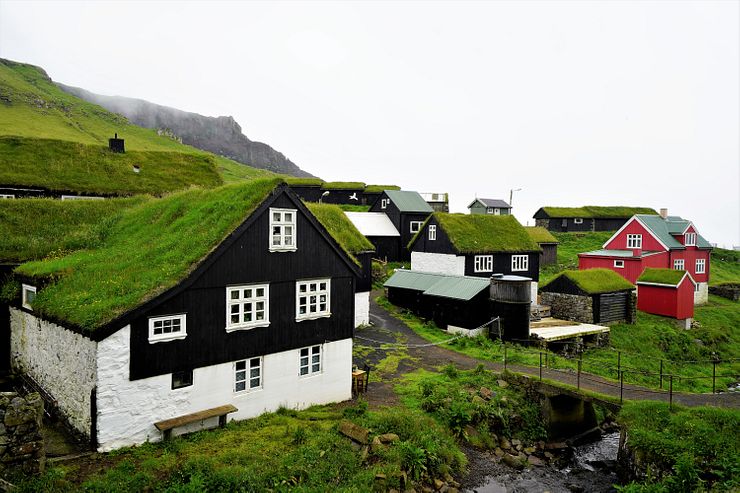
The village on Mykines has the same name as the island and it has only 11 permanent residents living there throughout the entire year. The village doesn’t feel that small because it has around 40 houses, but many of them are only used in the summer. Mykines used to be one of the bigger villages in the Faroe Islands, back in 1940 it had 170 residents, quite a difference from today.
The village comes alive during the summer months from May to August when locals and tourists come to the island. During these four months, it’s easy to get to Mykines by daily ferries compared to the rest of the year when the people living on the island have to rely on the helicopter service for getting to the mainland.
For visitors it’s good to know the village has a free public toilet. It is easy to find; you pass it when walking from the ferry into the village.
Despite its small size, Mykines village has two cafés, Mykinesstova and The Locals, offering light snacks, meals and beverages. There is also a small shop selling things like snacks, books and souvenirs. It’s a good thing to support the local business, it helps keep things going on the island.
There are several variations of the name Mykines. Historic names include Mykiness, Mikjinees, Mikjunes, Mygenes, Mygenæs or Myggenæs. Mykines is the only form in use today. The oldest form is Mykiness originating from the Celtic term muc-innis meaning island of pigs.
Due to the growing number of visitors to Mykines, regulations have been introduced to protect the fragile environment and birdlife. Access to the island is capped at 200 people per day, and walking in the outfield to see the puffins is only permitted between 10:00 and 17:00 (which suits most day‑trippers). Outside these hours, you’ll need permission from the landowners to enter areas beyond the village.
To hike in the outfield on Mykines, you must join a tour led by an approved Faroese guide.
Tours arranged by the Mykines landowners’ association cost DKK 400 (January 2026) when booked on hiking.fo no later than the day before arrival. Paying on arrival costs DKK 500. The fee applies to everyone aged 15 and up.
You can also reach out directly to a local Faroese guide to arrange your own tour, or book through one of the Faroese travel agencies that offer trips to Mykines. For suggestions, see Tours to Mykines.
When I last visited Mykines in 2019, it was also possible to pay the guide fee through the ferry operator at mykines.fo. I’m not sure whether that option still exists, as the ferry booking website is currently down for technical reasons (January 2026).
Mykines is pronounced something like [Mee-chin-ess] (/ˈmiːtʃɪˌneːs/).
For general tourist information, see Sightseeing in Mykines on the Visit Vágar site.
Don’t bother bringing your drone, at least not during the puffin season. The birds, not only puffins, are everywhere on the island and it’s not a good place to fly a drone.
When you should go to Mykines depends on if you want to see puffins or not. Puffins are seabirds and live most part of the year out at sea. They come to Mykines for nesting, but early in the season, they spend little time on land. Around mid-June, the puffins prepare their nests and from that time onward you can see them on Mykines.
The baby puffins hatch in July and leave the nests in mid-August. By the end of August most puffins have left Mykines and are back out at sea. If you want to be sure to see puffins on Mykines, don’t come in the first half of June or in late August. More information about the puffin season here.
If you don’t care about the puffins and visit Mykines for hiking or just getting away for a while, you can go anytime, but the summer has the best weather. Between the 1st of May to the 31st of August, there is a daily ferry to Mykines. In April and September, the timetable is limited, with departures on Tuesdays, Thursdays and Saturdays (2022). Outside that period, except one week in October, you must go by helicopter and stay at least one night on the island. See more about how to get to and from Mykines below.
Most travelers visit Mykines on a day trip, but if you want to stay overnight, you have several options on the island. There are guest houses, a campsite and private homes for rent through Airbnb. In the rest of the Faroe Islands, it is important to book early, demand is high and supply is low. I don’t know how it is on Mykines though. See the Visit Vágar website for more information about accommodation.
When updating this post in January 2026, the ferry operator’s website was temporarily down. I’ll update this section with current ferry information once it’s up and running again.
You can get to Mykines by ferry or by helicopter. The ferry service is run by mykines.fo and you book the tickets on their website. This is the only regular ferry in the Faroes you need to book in advance, it often fills up in high season. There are other transport services to Mykines as well, see the Tours to Mykines section for more information.
The ferry departs from the port in Sørvágur and there is a public bus connection from Tórshavn if you don’t have a car. If you are driving, the port has plenty of parking spaces. Ferry schedule between the 1st of May to the 31st of August 2022:
If the regular departure at 10:45 is fully booked and there is enough demand, an extra departure at 12:00 with a return at 18:30 might be available. Check the mykines.fo website or call their office and ask for availability. Note that there are no synchronized bus connections for the non-regular ferry departures.
For ferry schedule and booking outside the tourist season, see the pages for April and September.
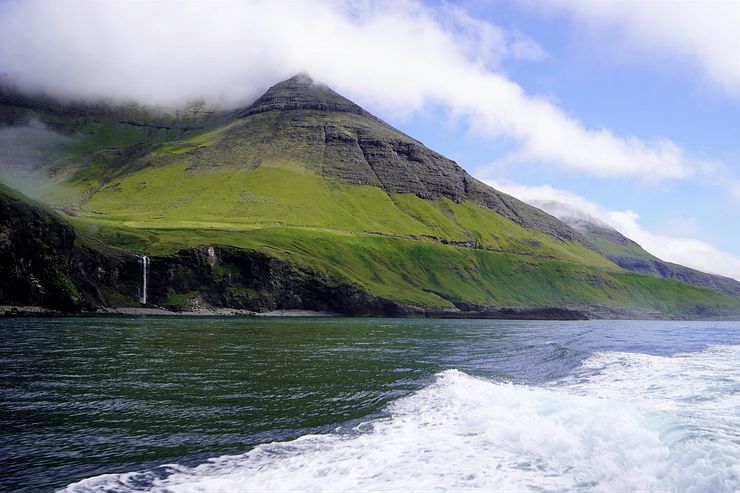
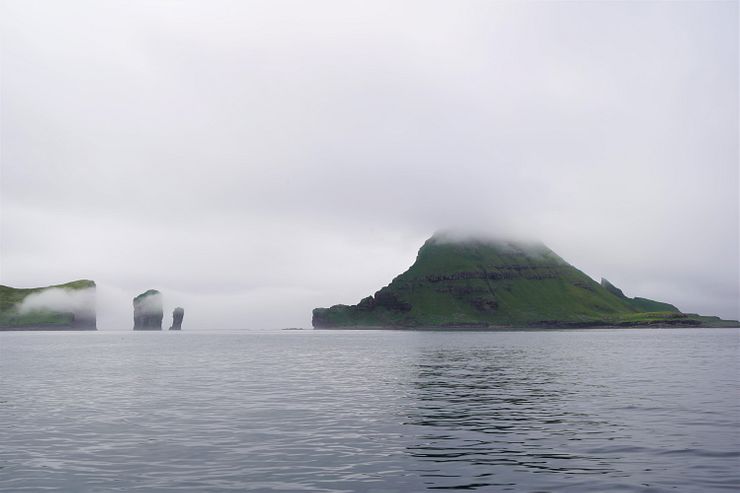
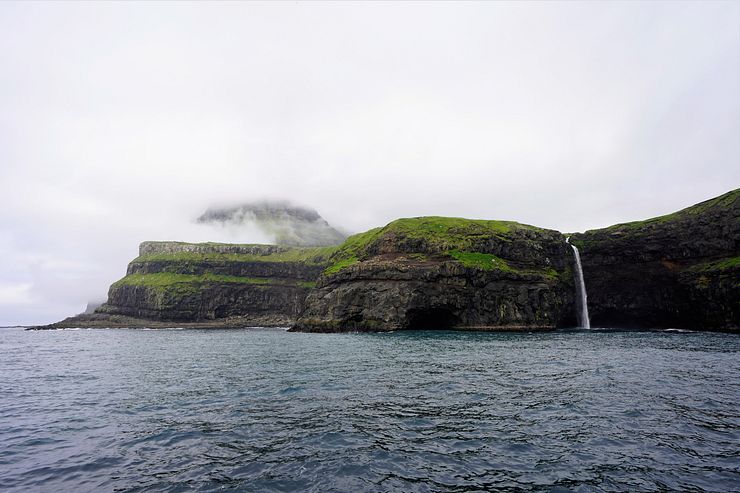
The boat ride takes 45 minutes and on the way out to Mykines, the boat takes a route close to the Múlafossur waterfall in Gásadalur so you can see it from the water. It also passes the Drangarnir sea stacks and the Tindhólmur islet.
Always check the mykines.fo website on the day of departure to verify the ferry is running according to schedule. In case of bad weather, the ferry is canceled, and it’s often a late decision, 1–2h before departure time.
A word of advice, don’t schedule your day at Mykines on the last day of your trip. All sources about Mykines, both official tourist information and travel blogs, give this advice.
The boat back to Vágar from Mykines is sometimes canceled due to bad weather. You are stranded on the island until the weather calms down and the ferry can operate again. That’s not so fun if you have a flight home the next day.
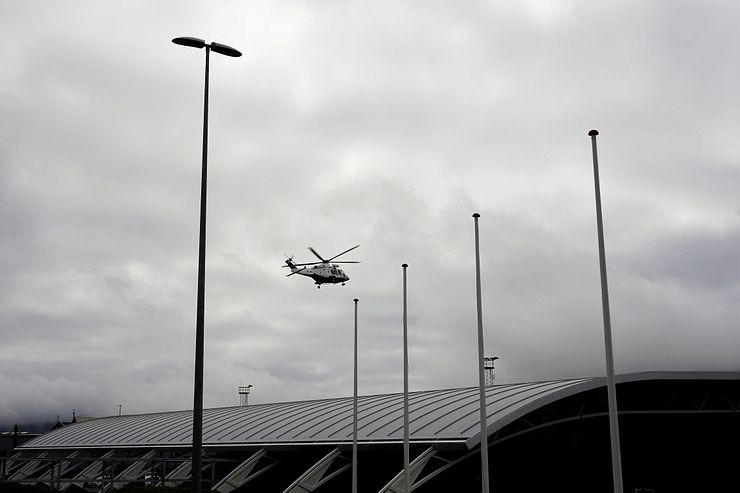
To facilitate the life for the locals living on remote islands there are subsidized helicopter flights between the islands. For some islands, including Mykines, this is the only transport available all year round when ferries don’t operate because of bad weather or low demand.
It’s cheap to use the helicopter service, the ride between Vágar Airport and Mykines is only 145 DKK (2019). This is something tourists have discovered, and it’s popular to do a helicopter flight as sightseeing during a visit to Faroe Islands.
If I was living at one of the islands, it would annoy me if tourists booked all helicopter seats when I needed the transport. I guess it’s not that big of a problem otherwise they would have done something about it. I think it’s only the route between Vágar Airport and Mykines that is fully booked on a regular basis. There is also the rule that you cannot book a return flight on the same day so you must arrange other transport back unless you will stay at your destination.
Atlantic Airways operates the helicopter flights, see the website for timetables and booking. For Mykines, the booking opens 7 days in advance. If you want a ticket, I recommend to make the reservation as soon as the booking opens. The helicopter has only 12 seats and they sell out fast. Flights are only available certain days of the week.
As you can book a one-way helicopter ticket only, you must take the ferry back from Mykines unless you intend to stay overnight. Remember to check the weather before taking the helicopter to Mykines. You need to be sure the ferry is operating so you don’t get stuck on the island. The helicopter is not as sensitive to bad weather as the ferry, but the pilots must be able to see the ground to fly.
We didn’t follow the advice about not going to Mykines the last day of the trip because we wanted to do one helicopter ride and the last day was the only day we could do it. We were lucky to get tickets for both the helicopter and the ferry back from Mykines. We checked in at 09:40 at the Atlantic Airways desk at the airport, 35 minutes before the departure time at 10:15.
Ten minutes later, 25 minutes before departure, the flight was canceled due to misty weather. We could have made it to the ferry departing at 10:45, the airport is close to the port, but there were no tickets left. The nice staff at the Visit Vágar office at the airport, helped us to book tickets for the extra ferry departure at 12:00. We could go to Mykines after all!
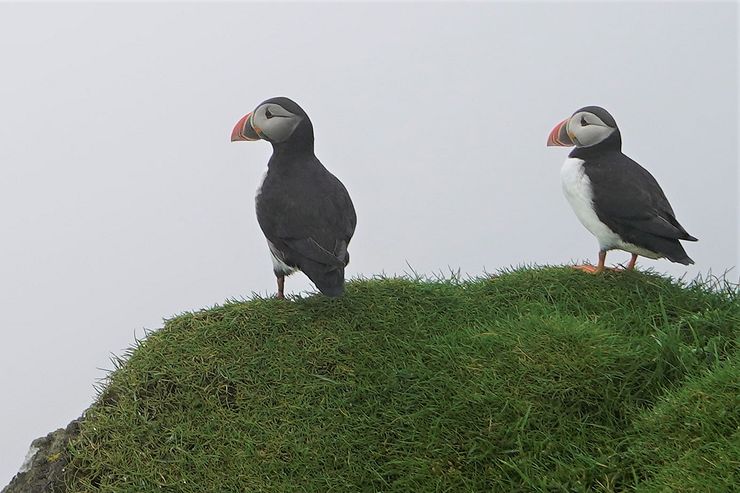
I’ll admit it — I’m no bird expert. I’ve never been the kind of traveler who can identify species by sight or sound. But puffins are a different story. How can anyone resist them? They’re ridiculously cute, a little bit comical, and somehow manage to look both solemn and effortlessly cool at the same time.
Before this trip to the Faroe Islands, I had never seen a puffin in real life. When we visited Iceland, we were just outside the season, so we missed them entirely. So this time, we made sure to spend a day on Mykines to finally see them.
Before the trip, I wanted to learn a bit more about puffins — it’s always fun to understand what you’re actually seeing on a journey. What I discovered surprised me. Puffins aren’t just cute and funny looking; they’re genuinely fascinating birds. So of course, I have to share a few puffin facts with you.
You will see a lot of puffins on Mykines during the summer and you don’t have to walk that far from the village to do it.
Thanks to the puffin colonies, Mykines is one of the most popular destinations in the Faroe Islands. To see the puffins, you must leave the village and as the island has no roads; you do that by walking.
Most visitors do a scenic hike to a lighthouse on Mykineshólmur, an islet west of the Mykines island. The hike is about 2.5km (1.55 miles) one-way for a total of 5km (3.1 miles) return. The trail is marked on Google Maps and I entered a marker for the start of the trail in the map below. I estimated the length of the hike by measuring on the map so it’s not that exact.
January 2026 update: To protect the nesting puffins, visitors are no longer allowed to enter Mykineshólmur during the summer, as the trail to the bridge passes through the main nesting area. You can still hike from Mykines village to the viewpoint á Rógvu, where you’ll see the large puffin colony, the bird cliffs, and Mykineshólmur. The hike must be done with a guide, who will also share stories about island life and the puffins.
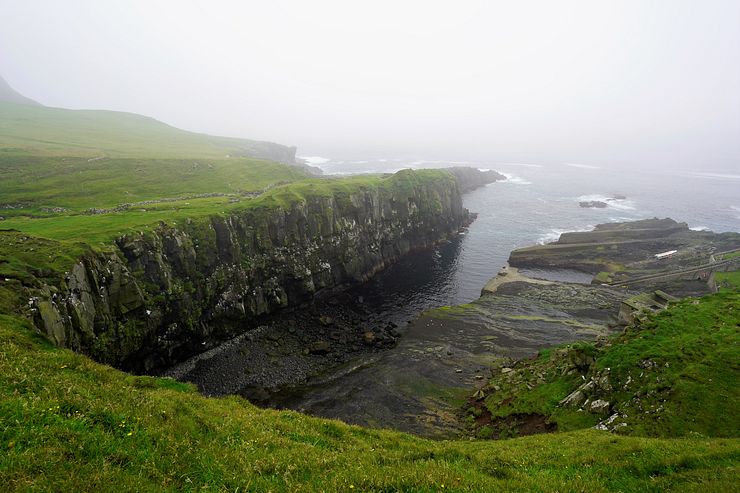
From the village you work your way west towards the narrow strait separating Mykines and Mykineshólmur. The path leading down to the bridge crossing over to the islet is rather steep and I think this is the hardest part of the whole hike. The second part of the hike on Mykineshólmur is longer, but easier. Overall this is not a difficult hike, but the path gets slippery when it rains.
If the weather is bad or if you feel you cannot make the whole hike, you can walk to the bridge and turn back there. You will see many puffins on that part of the hike. Just make sure you will make it back to the ferry before it departs, it will not wait for you!
We had back luck with the weather the day we went to Mykines. The sun was shining at the port in Sørvágur, it is not so common in the Faroe Islands so everyone on the boat was happy. The weather changed during the boat ride and the closer we got to the island, the worse it got.
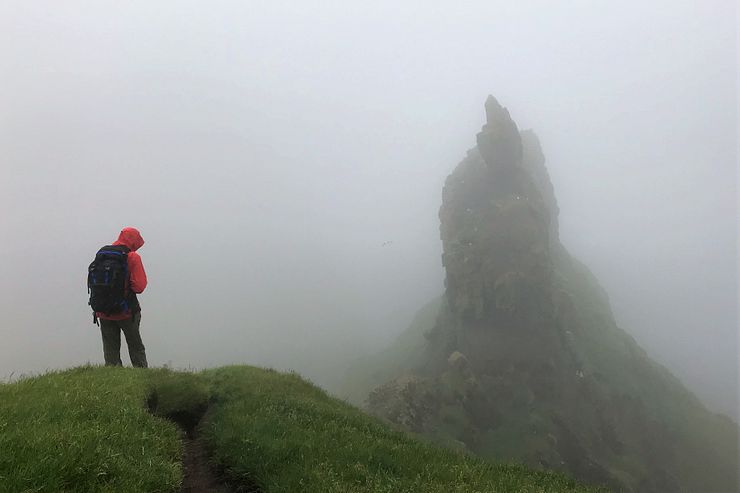
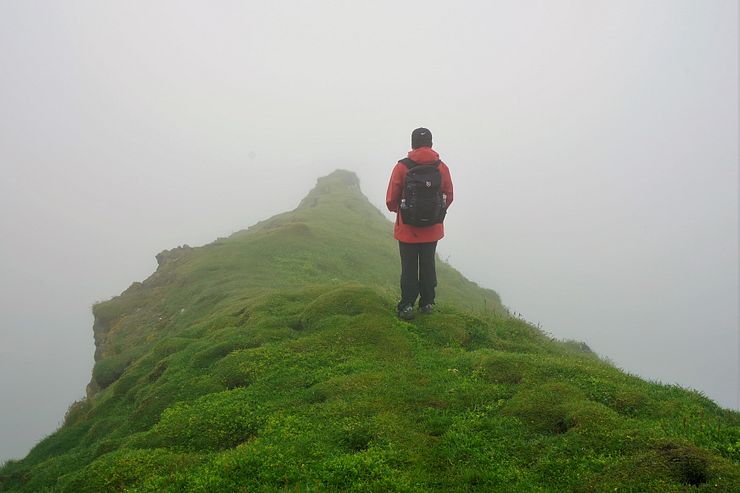
Happiness turned into disappointment when we arrived at Mykines, it was very cloudy and misty with a light rain falling. We couldn’t see much at all and we realized that the hike would not be something to write home about, but at least we were hoping to see the puffins.
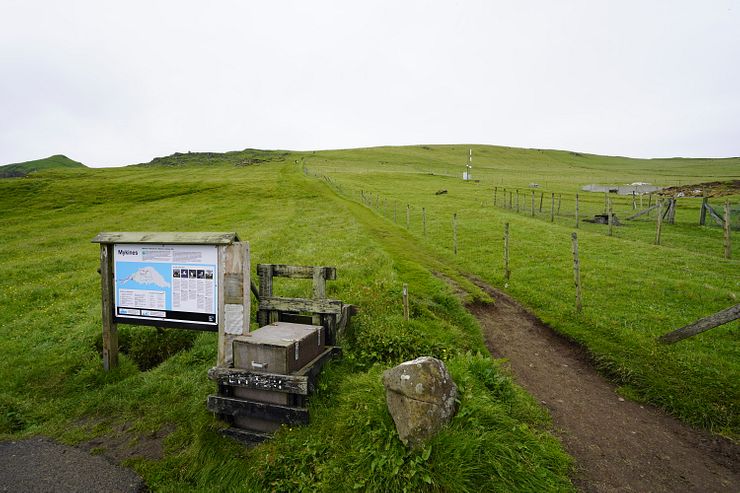
The start of the trail to the lighthouse is just before entering the village. If you need to stop at the toilet, go into the village first and then come back to start the hike. The trail starts by ascending a hill, but it is not steep. Close to the top there was a guy in a green jacket checking the receipts for the fee you must pay to walk outside the village.
The trail is marked with yellow sticks in the ground and is easy to follow even in the mist. No risk of getting lost on this trail.
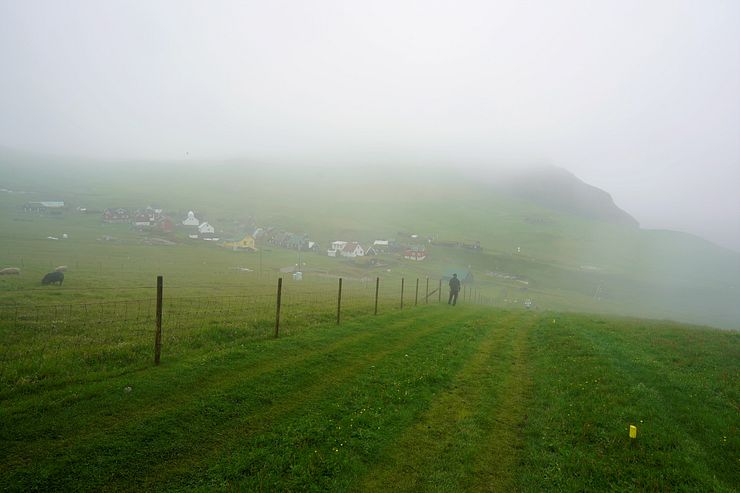
At higher grounds, we cannot see far in the mist. The hike is scenic, but not on this day. This is how it is in the Faroe Islands, the weather is so unpredictable and there is nothing you can do about it.
When passing through the puffin colonies you should stick to the path. The puffins dig out their burrows and nest underground next to the path so be careful where you step. A burrow is a hole or a tunnel over a meter deep. The guys in green jackets watch over sensitive sections of the trail and tell people not to linger too long at the same spot. The puffins need a chance to enter and exit their burrows.
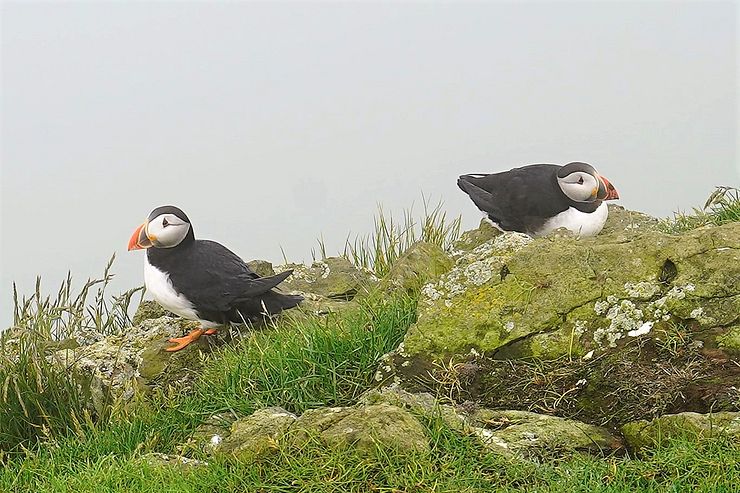
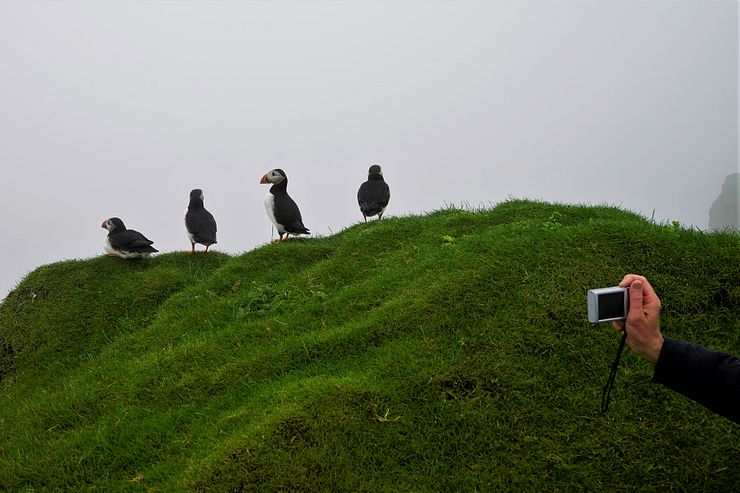
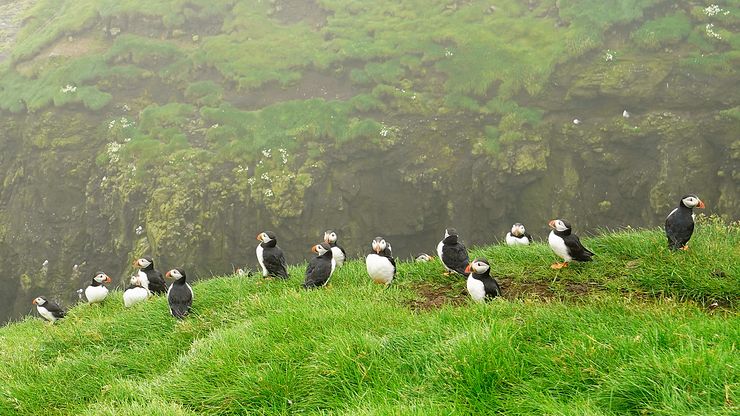
You don’t need to walk that far on the trail before the first puffins appear. What a great sight!
I know it is tempting to come close to the puffins to get that perfect shot, but please show them respect and stay out of their way as much as possible. It is better to bring proper gear if you want close ups. You will be close to the puffins but not at all places so bring a tele lens if you have one. I bought a new camera just before the trip and had only a wide-angle lens and it was hard to get sharp photos with that one.
We see many puffins along the path, but not much else because of the heavy mist. If it had not been for the puffins, this day at Mykines would have been a big fiasco.
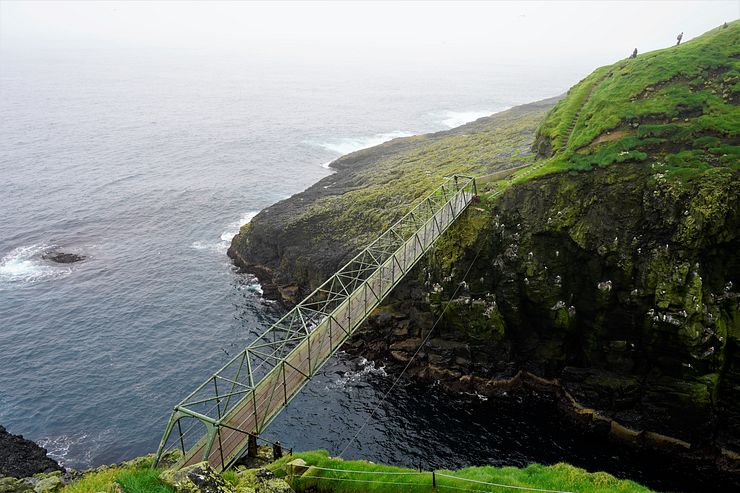
After a while the path descends, we are approaching the bridge between Mykines and Mykineshólmur. This is the hardest part of the hike, it’s steep, muddy and slippery but no problems if you take it slow and watch where you put your feet.
There are many puffins on the slopes close to the bridge, the guys in green jackets watch for people who stop too long close to the puffins.
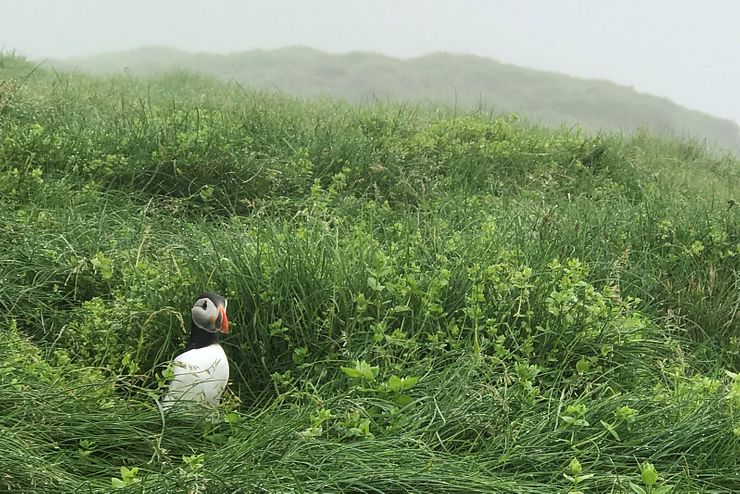
It is difficult to see where the puffin burrows are in the ground when the long grass hides the entrances. There is a reason they tell you to stay on the path. Look at the puffin in the video clip, it disappears into its burrow that isn’t visible at all.
We crossed the bridge and continued just a short stretch on the path on Mykineshólmur before deciding to turn back. We could see nothing because of the mist. Instead we went back to the village and had tasty waffles before boarding the ferry at 17:05.
There were no signs of the mist clearing while walking back to the village. I did the hike to the Kallur lighthouse on Kalsoy the day before in similar conditions.
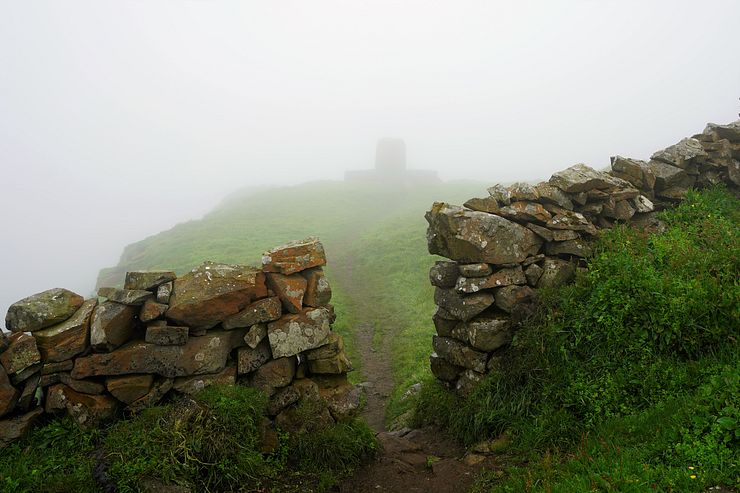
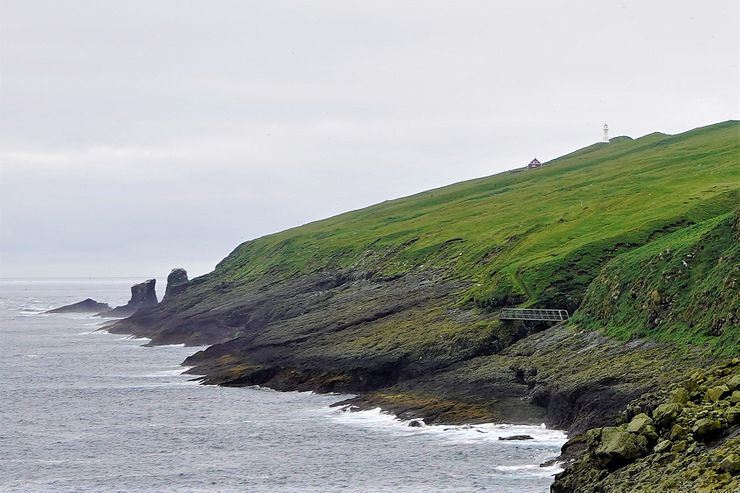
After relaxing at a café in the village, it was time to walk down to the port and take the ferry back to Vágar. To our surprise the mist had cleared and we could see all the way to the lighthouse from the village. Annoying, but at least we could see what we had missed.
This section contains affiliate links. When you make a purchase of a tour through a link, I may earn a small commission at no extra cost to you. Thanks for your support — it helps keep the site afloat.
If you prefer joining a guided tour instead of arranging the trip to Mykines on your own, I recommend checking out Guide to Faroe Islands. They offer a wide selection of tours to destinations all over the Faroe Islands.
A quick reminder when choosing your date: the puffins are only on Mykines during summer. See When to go to Mykines for more information.
Mykines is one of the most popular tourist locations in the Faroe Islands, and there are many tours to choose from. For a list of all available packages, see the Mykines Tours page. I have selected a bunch of tours offering different ways to experience Mykines.
Let’s start with three tours providing the typical Mykines day trip. The common way to visit the island is to take the regular ferry service from Sørvágur to Mykines in the morning. At Mykines, you have 5.5 hours to explore the island and watch the puffins before it is time to catch the ferry back to Sørvágur.
If you stay in Sørvágur, or if you have a rental car, and don’t need transport to the port, consider the The Classic Mykines Tour. It’s a popular tour with excellent reviews. A similar tour is the Amazing 5.5 Hour Day Tour to Mykines Island, for which you can add transfer from Tórshavn at an additional cost.
For travelers based in Tórshavn and exploring the islands on day trips, another option is the Beautiful 8 Hour Tour to Mykines Island. The tour includes hotel pickup in Tórshavn and transfer to Sørvágur via the scenic mountain road Oyggjarvegur.
All three tours include your ferry ticket to Mykines, the island’s hiking fee, a local guide, and a packed lunch.
For a visit to Mykines that doesn’t take a full day, the Mykines Shuttle Boat is an interesting alternative to the standard day trip. The speedboat leaves Sørvágur at 9:30 (2026 schedule) and reaches Mykines in just 30 minutes, giving you around three hours on the island before returning at 13:30. The mandatory hiking/guide fee isn’t included, but you can purchase it from the crew before departure.
Reviews mention that the boat often swings past Múlafossur waterfall for a view from the water, as well as the Drangarnir sea stacks and the islet of Tindhólmur. On calm days, it may even pass through the arch of the largest sea stack.
It’s a time‑efficient way to see the puffins and still have ample time for other activities afterward.
If you want to stay the night at Mykines for a chance to see the sunset, check out the Classic Mykines Overnight Sunset Tour. After arriving on Mykines in the afternoon, you’ll have dinner before heading out on a late‑evening walk to watch the puffins at sunset. The next morning offers another opportunity to see them before you leave. Ferry tickets and the guide are included in the tour price.





Comments
Comments are closed. Contact me if you have a question concerning the content of this page.